For a few years the trick was simple. Put a giant mascara wand on a London bus, film it from eye height as if on a phone, post it, and watch people ask whether it really happened. Fake out-of-home, or FOOH, became one of the most copied formats in brand content. Maybelline on the Tube and Jacquemus' bags racing through Paris are still the examples everyone points to.
That moment has moved on. Two things changed this autumn that are worth knowing if you are planning content for next year.
The format got cheap, and the feed noticed
Generative video tools can now produce a rough FOOH clip in an afternoon, and you can see the result on TikTok. When we looked at the most-liked videos for "FOOH CGI ad" from the past three months, most were posted by studios selling the format. Several said proudly that the clip was "made 100% with AI", and nine of the thirteen had fewer than a thousand plays. The tracker fooh.com, which analysed more than 4,500 of these videos for its 2026 report, puts the share that actually goes viral at 19 percent.
So the spectacle alone no longer carries a film. A floating product over a skyline is something people have seen hundreds of times. What still travels is what always worked in film: an idea that fits the brand, a shot built with care, light that matches the street, and a reason to keep watching until the end.
Something real in the frame
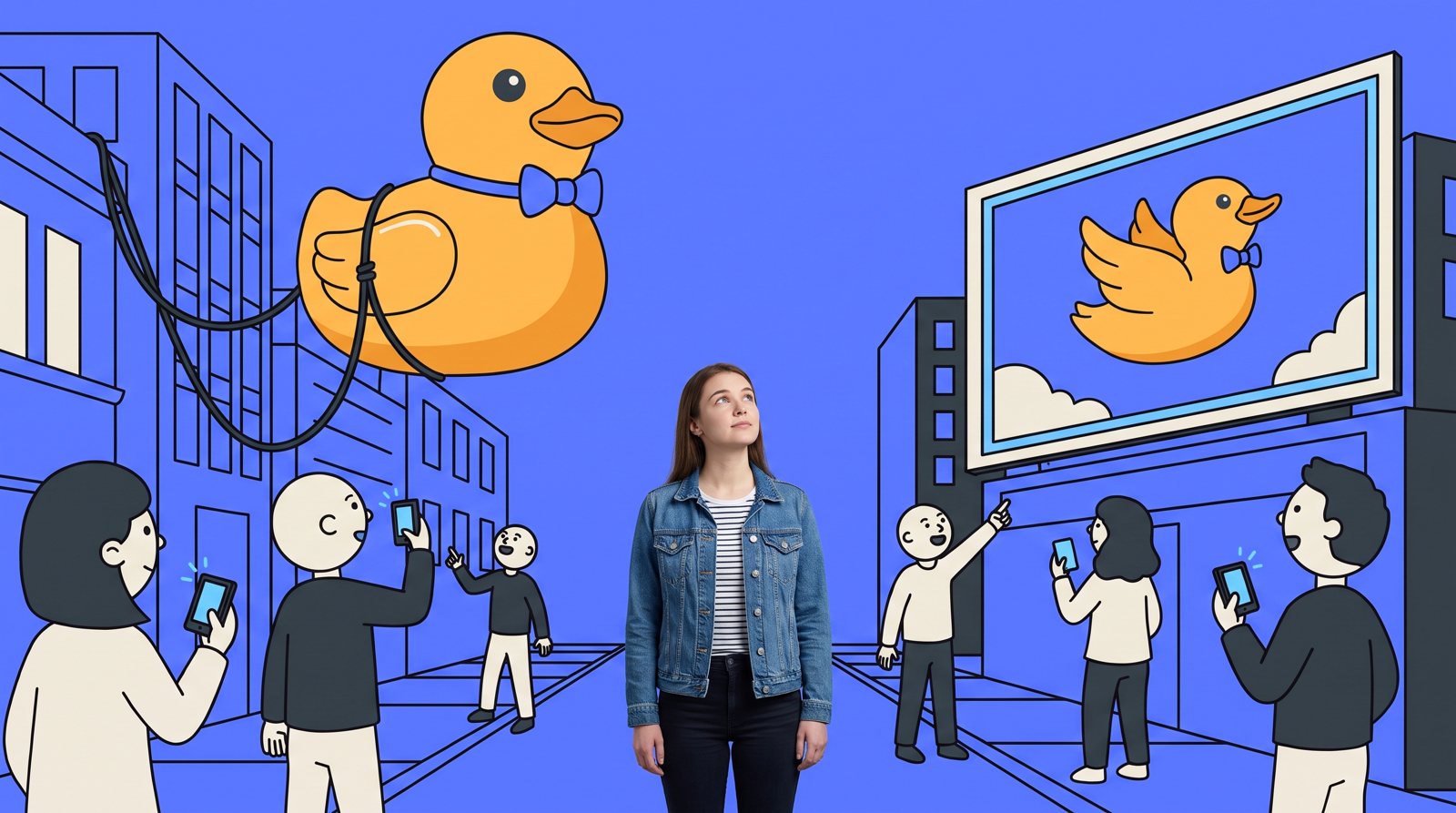
One of the more interesting cases from September comes from the CGI studio WHY.CGI, which published how it built a campaign for NYX around a giant inflatable duck. The duck was real. It stood on a shopping street next to the product, and people took photos underneath it. A QR code on the installation opened a CGI film in which the same duck is flown over the city by helicopter. The street gives you something to stand under; the film gives you the story.
We think that combination is where the format is heading. A small physical piece, shot properly, makes the digital part believable and gives people a place to go. It also gives the press and the retail team something to work with, which a pure render rarely does.
The label is now part of the brief
The second change is legal, and it applies in Belgium too. Since 2 August 2026, Article 50 of the EU AI Act requires deepfakes to be clearly labelled. In the European Commission's guidance, that can cover AI-made video of realistic places, objects and events, not only people. Work that is evidently artistic or fictional gets a lighter form of disclosure, but law firms reading the draft guidance point out that this relief narrows once the commercial purpose dominates. Physically impossible scenes, like a talking animal, are generally not treated as deepfakes at all. Whether your film falls under the rule depends on how it was made and how real it looks, so it pays to check at the start rather than at delivery.
The good news is that honesty costs very little. A short "CGI" in the caption or a quiet tag in the corner does not stop anyone from enjoying a giant duck over a city. Audiences forgive spectacle; what they hold against a brand is being misled about something that never happened.
A good starting point for next year is to agree early on what in the film is real, what is built, and how you will say so. Then shoot the real part as carefully as you render the rest.
That mix of film craft and CGI is the kind of work we enjoy making, and we are happy to think along whenever you get there.