Two large surveys of creative people came out this autumn, and they agree on one thing: AI has stopped being an experiment. Envato asked 1,033 creatives in 103 countries in September, and 87 percent of them use AI at work, 58 percent every day. D&AD spoke with 197 creative leaders in 30 countries for its AI & Creativity Report 2026 and heard the same story. The tools are everywhere.
What they also agree on is less obvious. The time AI saves has not turned into lower prices. And there is a good reason why it shouldn't.
Time, not money
Ask creatives what AI gave them, and the answer is hours. Envato found that 49 percent of those using it work faster, while only 7 percent earn more. Where rates moved over the past year, they mostly went up: 40 percent of freelancers and studio owners raised them, 6 percent lowered them. When people explained why, they named speed, reputation and better creative direction before AI skills.
D&AD looked at the same question from the agency side. Around 70 percent of the leaders it interviewed report no change in fees or pricing models. Its conclusion is uncomfortable for the industry: if work is still priced by hours and deliverables, and AI makes both faster, the gain simply moves to the client. Luma's survey of 760 creative professionals puts the tension in one line. 55 percent of agencies expect to raise their fees, while 53 percent of brands expect to spend less on agencies because they can do more with AI themselves.
What the hours are worth
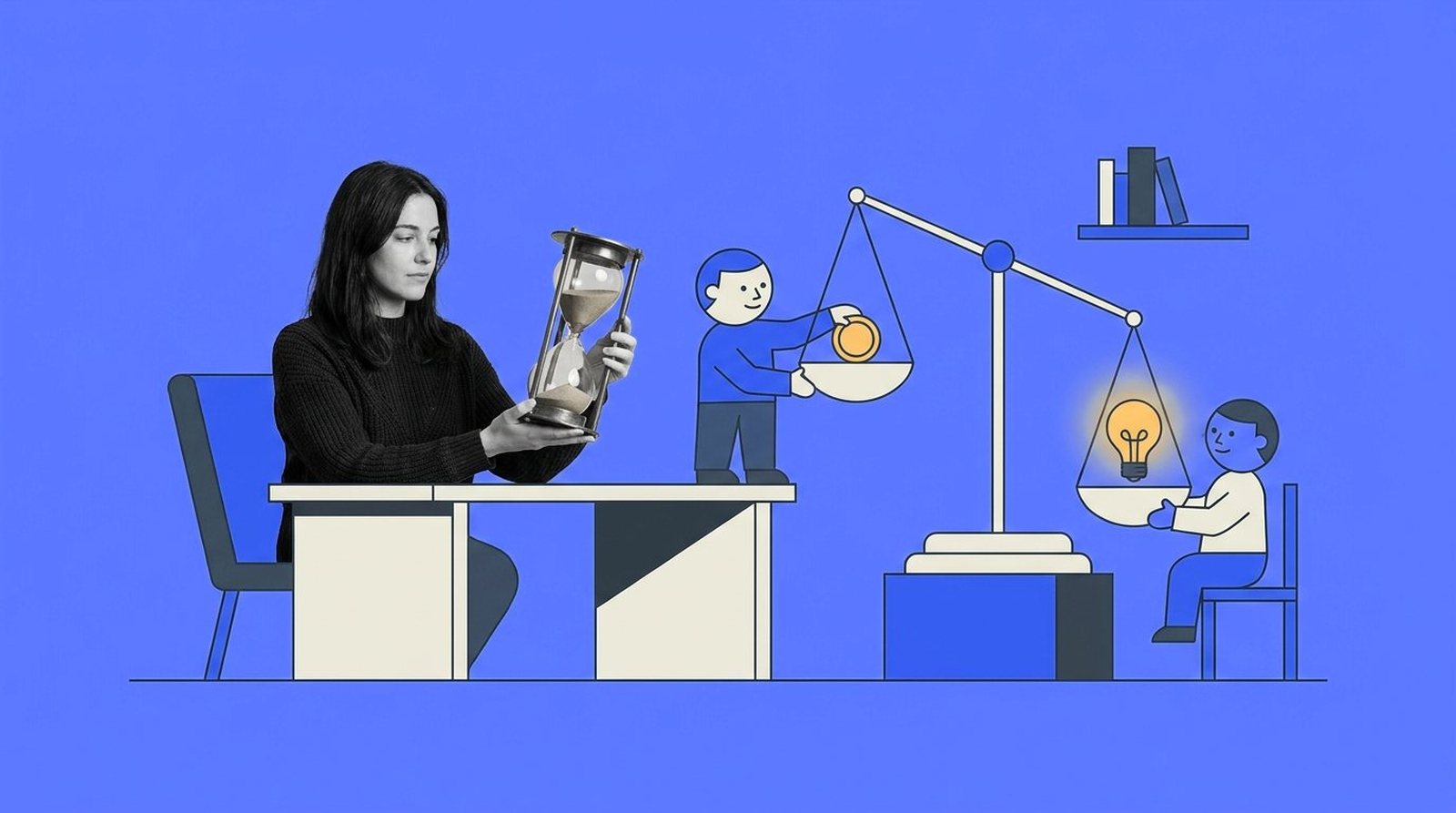
So what does a brand pay for when its production partner uses AI? The reports point to the same answer: the decisions. Which idea deserves to be made. Which of the five generated options fits the brief, and which four go in the bin. What has to be shot for real, because it needs to feel real. D&AD puts it plainly: the work should be sold as decisions that produce outcomes, not hours that produce files.
There is a commercial reason for that, beyond craft pride. D&AD quotes a Klaviyo survey of 8,000 consumers in eight countries: when people can tell content is AI-generated, 32 percent trust the brand less and only 7 percent trust it more. The cheap shortcut has a price. It is paid later, in trust.
Three questions worth asking your partner
Where do you use AI, and where don't you? A clear answer means someone has thought about it. Envato found that nearly six in ten creatives working in teams have no written AI policy, and more than half of those using AI have used it on client work without saying so.
What happens to the time it saves? The answer you want: more thinking, more options tested, a better edit. Not just more files.
Who makes the final call? It should be a person you can talk to.
How we handle it
We use AI where it helps the film: to explore a look, to build shots no budget could, to take over the repetitive work around the edit. Our working rule is written down on our Human First page: AI makes, a human decides, and we never pass off a generated image as a shot one without saying so. What you pay for is the same as it always was: the idea, the people who make it, and the judgement in between.